

































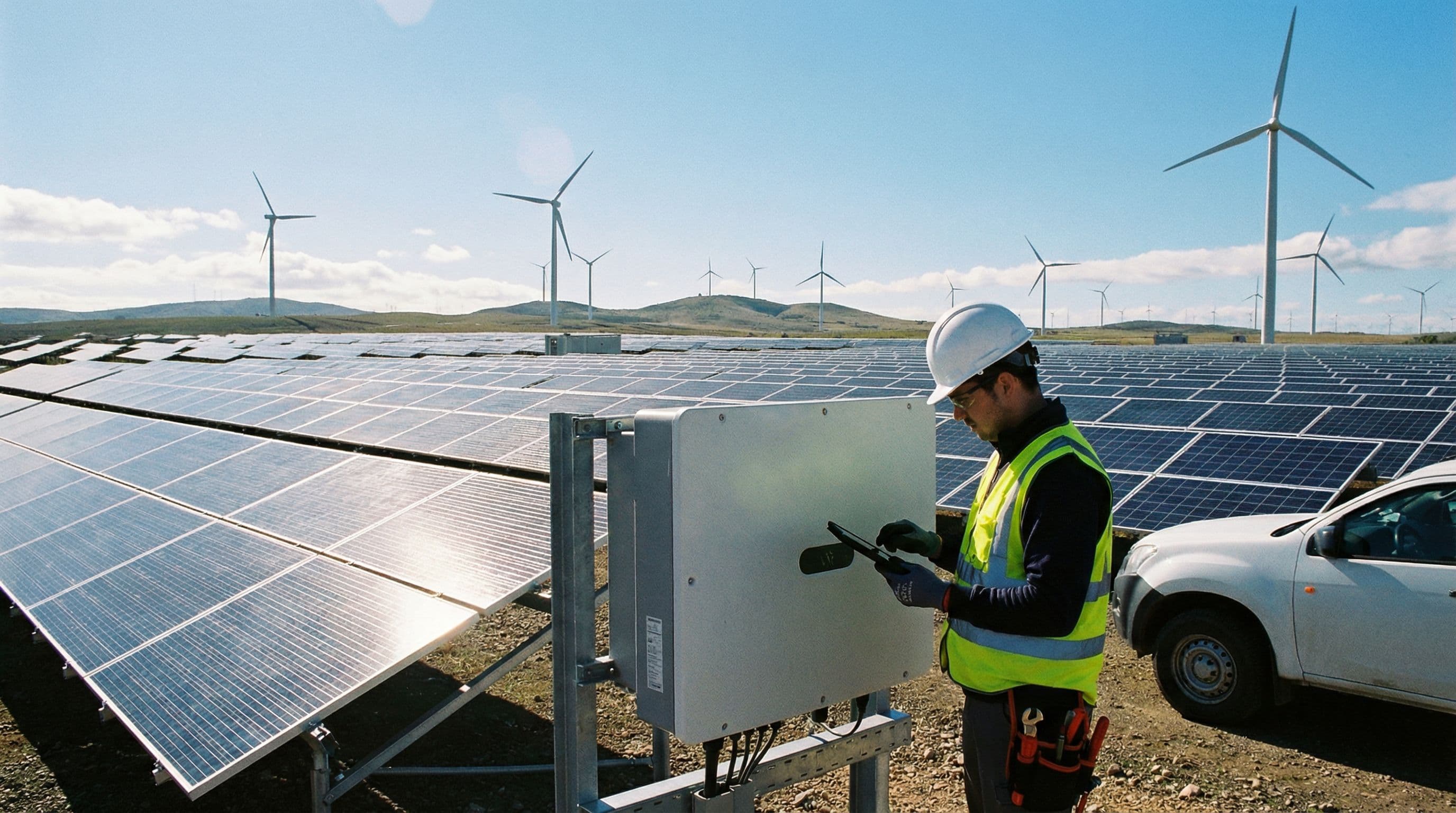
Recommended Coverage for Energy & Power in Joliet, IL
Energy & Power businesses face unique risks that require specific coverage types. Here are the policies most energy & power operations need:

General Liability Insurance
Essential coverage for every business — protect against third-party bodily injury, property damage, and advertising claims.

Commercial Property Insurance
Safeguard your business property, equipment, and inventory against damage and loss.

Workers Compensation Insurance
Cover your employees' medical expenses and lost wages for work-related injuries and illnesses.

Commercial Auto Insurance
Protect your business vehicles and drivers with comprehensive commercial auto coverage.

Commercial Umbrella Insurance
Extend your liability limits beyond your primary policies for extra protection against catastrophic claims.

Inland Marine Insurance
Protect tools, equipment, and goods in transit or stored at locations away from your primary premises.
Energy & Power Insurance Overview in Joliet, IL
Joliet energy teams work in a market shaped by active industrial corridors, utility yards, and a business base that includes 4,661 establishments across healthcare, technical services, retail, manufacturing, and food service. That mix means Energy & Power insurance in Joliet, IL has to fit more than one work setting: substation visits near dense commercial areas, field service on the city’s edges, and staging equipment at temporary job sites. With a cost of living index of 111, median home value of $318,000, and median household income of $77,649, local operations often balance budget pressure with the need to protect crews, tools, and service commitments. Joliet’s flood zone percentage is 17, and its moderate natural disaster frequency lines up with tornado, hail, severe storm, and wind damage concerns that can interrupt schedules fast. For energy producers, power companies, and utility contractors, coverage should be built around the way work actually moves through Joliet neighborhoods, industrial parcels, and regional service routes.
Why Energy & Power Businesses Need Insurance in Joliet, IL
Energy and power work in Joliet can involve utility corridors, temporary project locations, and equipment that may be moved between sites in the same day. That creates exposure to third-party claims, property damage, building damage, and legal defense costs if a jobsite incident affects a customer, nearby property, or a service location. It also makes equipment breakdown a real planning issue when transformers, testing gear, generators, tools, or mobile property are part of the day-to-day operation.
Joliet’s local risk picture adds pressure. The city has a crime index of 89, a 17% flood zone percentage, and moderate natural disaster frequency, with tornado damage, hail damage, severe storm damage, and wind damage listed among the top risks. Those conditions can complicate schedules and increase the chance of business interruption from outages or storm-related delays. For companies serving a region with utility contractors, power company insurance needs, and energy producer insurance concerns, the right policy mix helps support claims handling, settlements, and continuity planning without assuming every loss looks the same.
Illinois employs 45,938 energy & power workers at an average wage of $78,900/year, with employment growing at 0.9% annually. Payroll-based coverages like workers' comp are directly tied to wage levels — higher payroll means higher premiums.
Illinois requires workers' comp for businesses with employees (exemptions may apply: Sole proprietors; Partners). Non-compliance can result in fines and personal liability for owners. Commercial auto minimums are $25,000/$50,000/$20,000.
Key Risks for Energy & Power Businesses
Each of these risks can lead to claims that cost thousands — or more. Make sure your policy addresses every one:
- Environmental contamination liability
- Equipment breakdown and failure
- Worker injury in hazardous environments
- Regulatory compliance penalties
- Business interruption from outages
What Drives Energy & Power Insurance Costs in Joliet, IL
Energy & Power insurance cost in Joliet varies by operation type, equipment values, vehicle use, and site exposure. A utility contractor working across industrial parcels, neighborhood service routes, and temporary yards will usually present different risks than a power operation centered on a fixed facility. Local conditions matter too: the city’s cost of living index is 111, median home value is $318,000, and storm-related risks are part of the profile, including tornado, hail, severe storm, and wind damage. With a 17% flood zone percentage, location and site planning can affect pricing discussions. Coverage limits, underlying policies, fleet size, and the amount of contractors equipment or tools in transit can also influence the quote. For Energy & Power insurance quote requests in Joliet, the more detail provided about service territory, equipment, and vehicle use, the more accurately an insurer can evaluate the risk.
Insurance Regulations in Illinois
Key regulatory requirements for businesses operating in IL.
Regulatory Authority
Illinois Department of InsuranceWorkers' Compensation Insurance
Required for employers with 1+ employee.
Exempt categories:
- Sole proprietors
- Partners
- Corporate officers owning all stock
Commercial Auto Minimum Liability
$25,000/$50,000/$20,000 (bodily injury per person / per accident / property damage)
Source: Illinois Department of Insurance, U.S. Department of Labor
What Drives Energy & Power Insurance Costs in Illinois
Illinois premiums are 8% above the national average. Comparing multiple carriers is critical for energy & power businesses to avoid overpaying.
Illinois's top natural hazards — tornado, severe storm, flooding — directly affect property and liability premiums for energy & power businesses. Check your policy exclusions and ask about endorsements for these perils.
CPK Insurance compares energy & power quotes from top-rated carriers in Illinois. Enter your ZIP code to see rates in minutes.
Where Energy & Power Insurance Demand Is Highest in Illinois
45,938 energy & power workers in Illinois means significant insurance demand — and it's growing at 0.9% annually. These cities have the highest concentration of energy & power businesses:
Climate Risk Profile
Natural Disaster Risk in Illinois
Understanding climate-related risks helps determine appropriate insurance coverage levels.
Tornado
Very High
Severe Storm
High
Flooding
High
Winter Storm
High
Expected Annual Loss from Natural Hazards
$3.2B
estimated economic loss per year across Illinois
Source: FEMA National Risk Index
Insurance Tips for Energy & Power Business Owners in Joliet, IL
Match commercial general liability for energy companies to the work you do in Joliet, especially if crews enter customer sites, utility corridors, or shared industrial properties.
Add commercial property insurance for power operations if you keep transformers, generators, testing gear, or other equipment at a fixed yard or facility in Joliet.
Review workers compensation for energy workers based on hazardous field tasks, because crews may face injury, medical costs, lost wages, and rehabilitation needs on active job sites.
Consider commercial auto insurance for utility fleets when trucks, service vehicles, or hired auto and non-owned auto use are part of daily operations around Joliet.
Use commercial umbrella insurance for energy businesses when project size, third-party claims, or high-value equipment make higher coverage limits worth discussing.
Ask about inland marine insurance for tools, mobile property, equipment in transit, and contractors equipment that move between Joliet job sites and regional assignments.
Get Energy & Power Insurance in Joliet, IL
Enter your ZIP code to compare energy & power insurance rates from top carriers.
Business insurance starting at $25/mo
Energy & Power Business Types in Joliet, IL
Find insurance tailored to your specific energy & power business. Select your business type for coverage recommendations, pricing, and quotes:

Solar Contractor Insurance
Solar contractor insurance helps protect rooftop installers, battery storage crews, and subcontracted electrical work from costly claims. Request a quote to match your jobsite, equipment, and completed-operations needs.

Wind Energy Contractor Insurance
Get a wind energy contractor insurance quote built for turbine installation, tower crews, heavy equipment, and renewable energy projects. Coverage can be tailored for onshore wind farms, offshore wind projects, and multi-state job sites.

Oil & Gas Contractor Insurance
Get an oil and gas contractor insurance quote built for wellsite, drilling, and field service operations. Compare coverage for liability, equipment, vehicles, and umbrella protection.

EV Charging Installer Insurance
Get EV charging installer insurance built around electrical installation work, property damage, and workmanship defects. Compare coverage options and request a quote based on your project type.
FAQ
Energy & Power Insurance FAQ in Joliet, IL
A Joliet quote usually centers on your site types, fleet use, tools, mobile property, coverage limits, and whether you work as an energy producer, power company, or utility contractor.
Requirements vary by contract and operation, but many Joliet businesses ask about liability, workers compensation, commercial auto, and umbrella coverage before work begins.
Because Joliet has moderate natural disaster frequency and top risks like tornado, hail, severe storm, and wind damage, many businesses review property, equipment, and interruption exposures carefully.
Yes. Coverage can often be shaped around field crews, temporary sites, hired auto, non-owned auto, tools, and equipment in transit, depending on how the operation runs.
Business interruption can be discussed as part of a broader plan for power operations, especially when outages, equipment breakdown, or storm damage could slow scheduled work.
Most utility contractors start with General Liability Insurance, Workers Compensation Insurance, Commercial Auto Insurance, and Inland Marine Insurance. Depending on the contract and project scope, Commercial Umbrella Insurance may also be needed to support higher liability limits. If the work involves substations, equipment staging, or owned facilities, Commercial Property Insurance should also be reviewed.
Not always. Standard General Liability Insurance may exclude or limit pollution-related losses, so energy businesses should ask whether a pollution endorsement or separate environmental coverage is needed. This is especially important for fuel handling, storage yards, utility maintenance, and projects where spills or runoff could occur.
Workers Compensation Insurance can help cover medical costs and lost wages for employees injured on the job, including injuries from electrical contact, falls, burns, or equipment accidents. Because Energy & Power work often involves elevated structures, live systems, and heavy machinery, payroll classification and safety controls can affect both coverage and pricing. Make sure every field role is classified correctly.
Yes, especially if your tools, meters, diagnostic devices, or portable generators travel between job sites. Inland Marine Insurance can help protect movable equipment that is not well covered by a standard property policy once it leaves a fixed location. It is often a key policy for contractors and service crews in the energy sector.
Commercial Property Insurance may cover buildings, control rooms, warehouses, switchgear, and other owned physical assets after covered losses such as fire, wind, or certain equipment-related damage. For energy businesses, it should be reviewed alongside equipment values and outage exposures. If your operation depends on specialized machinery, confirm whether replacement cost, ordinance or law, and equipment breakdown options are available.
Yes, Commercial Auto Insurance is commonly used for service trucks, bucket trucks, vans, and trailers tied to field operations. It can help with liability and physical damage claims arising from vehicle accidents, which are a serious risk for crews traveling to remote or high-traffic job sites. Fleet size, driver history, and equipment carried on the vehicle can all affect the policy structure.
The right limit depends on project size, contract requirements, fleet exposure, and how much risk your primary policies already absorb. Energy and power operations often consider Commercial Umbrella Insurance because a severe injury, vehicle accident, or third-party claim can exceed standard limits quickly. A broker can help compare your contracts and operations against your current liability limits.
It may, depending on the policy form and endorsements. Commercial Property Insurance sometimes needs an equipment breakdown component to address mechanical or electrical failure, and business interruption coverage may be important if the outage affects revenue. Energy businesses should review how downtime, emergency repairs, and service interruptions are treated before a loss happens.