Understanding the Two Approaches
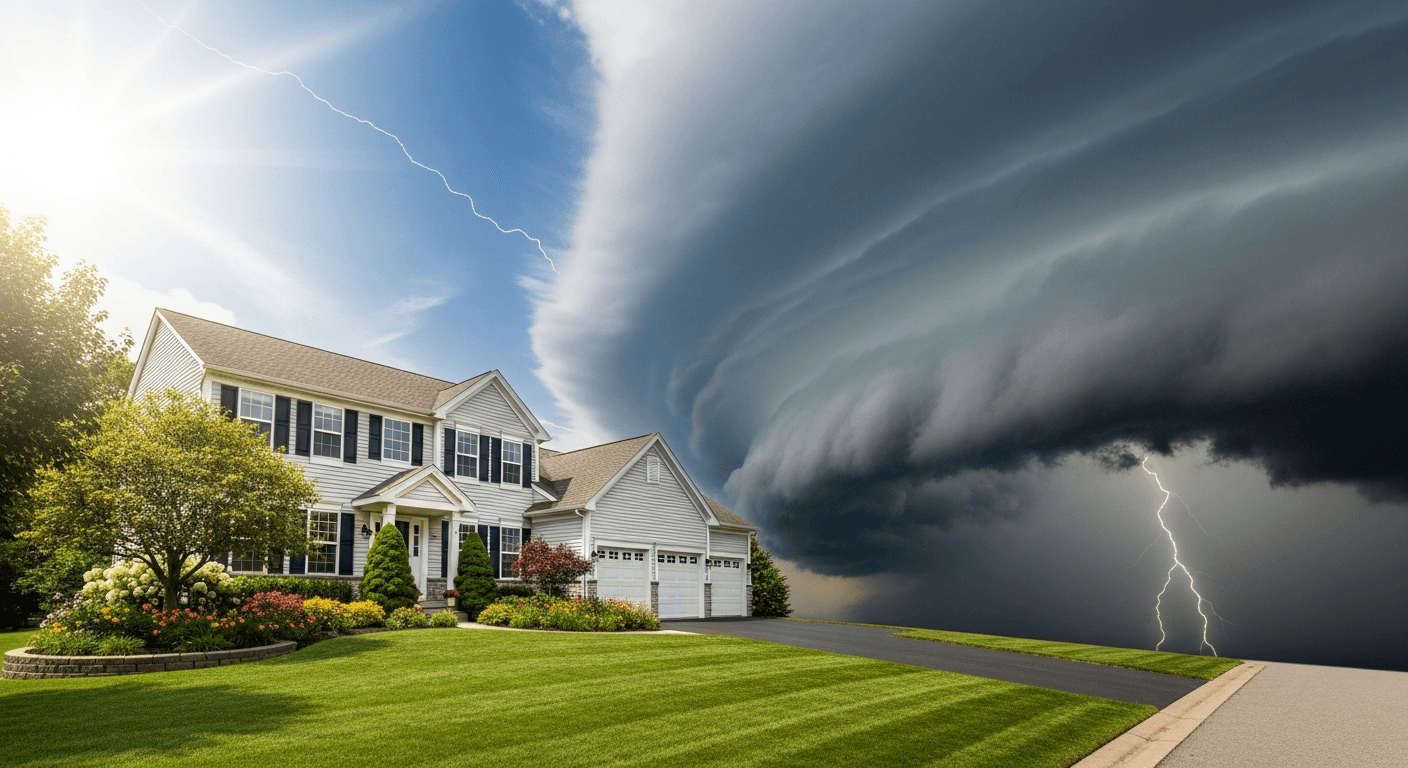
Named peril and open peril are two fundamentally different approaches to how property insurance defines what is covered. The distinction affects how much protection you have and how claims are handled, making it one of the most important decisions in property insurance.
A named peril policy covers only the specific risks, or perils, that are explicitly listed in the policy. If a loss is caused by a peril that is not on the list, it is not covered. Common named perils include fire, lightning, windstorm, hail, explosion, smoke, theft, vandalism, and certain types of water damage. If your property is damaged by a cause that is not listed, such as the weight of ice and snow on a roof, you have no coverage unless that peril appears in your policy.
An open peril policy, also called all-risk or special form coverage, takes the opposite approach. It covers all risks of physical loss unless specifically excluded by the policy. Instead of listing what is covered, the policy lists what is not covered. Common exclusions include flood, earthquake, war, nuclear hazard, wear and tear, and intentional acts. Everything not on the exclusion list is covered. This approach provides significantly broader protection because it covers unexpected and unusual causes of loss that a named peril policy would not address.
Coverage Differences in Practice
The practical difference between named peril and open peril coverage becomes clear when a loss occurs. Consider a scenario where a water pipe in the wall above your office bursts during a weekend, causing extensive water damage to your equipment, inventory, and interior finishes.
Under a named peril policy, you would need to verify that the cause of loss, in this case accidental discharge of water from a plumbing system, is listed as a covered peril. Most named peril policies include this specific cause, so the claim would likely be covered. However, if the damage was caused by a less common event, such as groundwater seepage or sewer backup, it might not be listed and therefore not covered.
Under an open peril policy, the claim would be covered unless the specific cause is listed as an exclusion. Since accidental water discharge is not a standard exclusion, the claim is covered. But the advantage goes further. If the water damage resulted from an unusual or unforeseen cause that you might never think to insure against, an open peril policy would still cover it as long as it is not specifically excluded. This is the fundamental advantage of open peril coverage: it protects against the unexpected.
The burden of proof also differs. With a named peril policy, the policyholder must prove that the loss was caused by a listed peril. With an open peril policy, the insurer must prove that the loss falls under a specific exclusion to deny the claim. This shift in burden of proof is a significant advantage for policyholders with open peril coverage.
Cost Comparison
Open peril coverage costs more than named peril coverage because it provides broader protection. The premium difference typically ranges from 10 to 30 percent depending on the type of property, the carrier, and other policy factors. For a commercial property policy with $500,000 in coverage, this might translate to an additional $500 to $2,000 per year for open peril over named peril coverage.
Whether the additional cost is justified depends on your risk tolerance, the value of your property, and the types of risks you face. For businesses with high-value property, extensive equipment, or significant inventory, the broader protection of open peril coverage is generally worth the additional premium. The peace of mind of knowing you are protected against unexpected causes of loss has real value, especially when the cost difference is modest relative to the potential claim amounts.
For businesses with lower property values or those operating in relatively controlled environments with well-understood risks, named peril coverage may provide adequate protection at a lower cost. A home-based business with minimal equipment might find named peril coverage sufficient, while a manufacturing facility with millions in equipment and inventory would benefit from the broader coverage of open peril.
Discuss both options with your insurance advisor and make an informed decision based on your specific risk profile and budget. CPK Insurance can provide quotes for both coverage types so you can see the exact cost difference for your business.
Which Is Right for Your Business?
Open peril coverage is generally recommended for businesses that have significant property values at stake, operate in environments with diverse or unpredictable risks, cannot afford to absorb unexpected property losses, or want the broadest available protection. Most commercial property insurance professionals recommend open peril coverage for the building and contents because the incremental cost provides substantially better protection.
Named peril coverage may be appropriate for businesses with lower property values where the premium savings are meaningful relative to the coverage, businesses with very well-understood and limited risk profiles, or situations where the budget is extremely constrained and some coverage is better than none. Named peril coverage is also common for specific inland marine policies or scheduled equipment coverage where the risks are well-defined.
In the homeowners insurance market, the most common policy forms use a hybrid approach. The HO-3 policy, which is the standard homeowner's policy, provides open peril coverage for the dwelling itself but named peril coverage for personal property. The HO-5 policy upgrades to open peril coverage for both the dwelling and personal property, at a higher premium.
Regardless of which approach you choose, make sure you understand the specific perils covered or excluded in your policy. Read the coverage form carefully, and ask your agent to explain any terms or provisions you do not fully understand. CPK Insurance can help you evaluate both options and choose the right coverage for your needs.
Key Takeaways
Named peril policies list the specific covered risks, and anything not listed is not covered. Open peril policies cover everything except what is specifically excluded, providing much broader protection. Open peril coverage typically costs 10 to 30 percent more than named peril coverage for the same property.
The burden of proof differs: with named peril, you must prove the loss was caused by a listed peril; with open peril, the insurer must prove the loss is excluded. This difference can be critical in complex or unusual claims where the cause of loss is not immediately clear.
For most businesses with significant property exposure, open peril coverage provides better value despite the higher premium. The protection against unexpected and unusual causes of loss is worth the incremental cost, especially when measured against the potential size of property damage claims.
CPK Insurance recommends discussing both options with your advisor and making an informed decision based on your specific risk profile, property values, and budget. We can provide side-by-side quotes to help you evaluate the cost-benefit tradeoff for your business.
Get Your Personalized Quote
Enter your ZIP code to compare insurance rates from top carriers.
Updated March 10, 2026

CPK Insurance Editorial Team
Licensed Insurance Advisors