Why Food Trucks Need Specialized Insurance
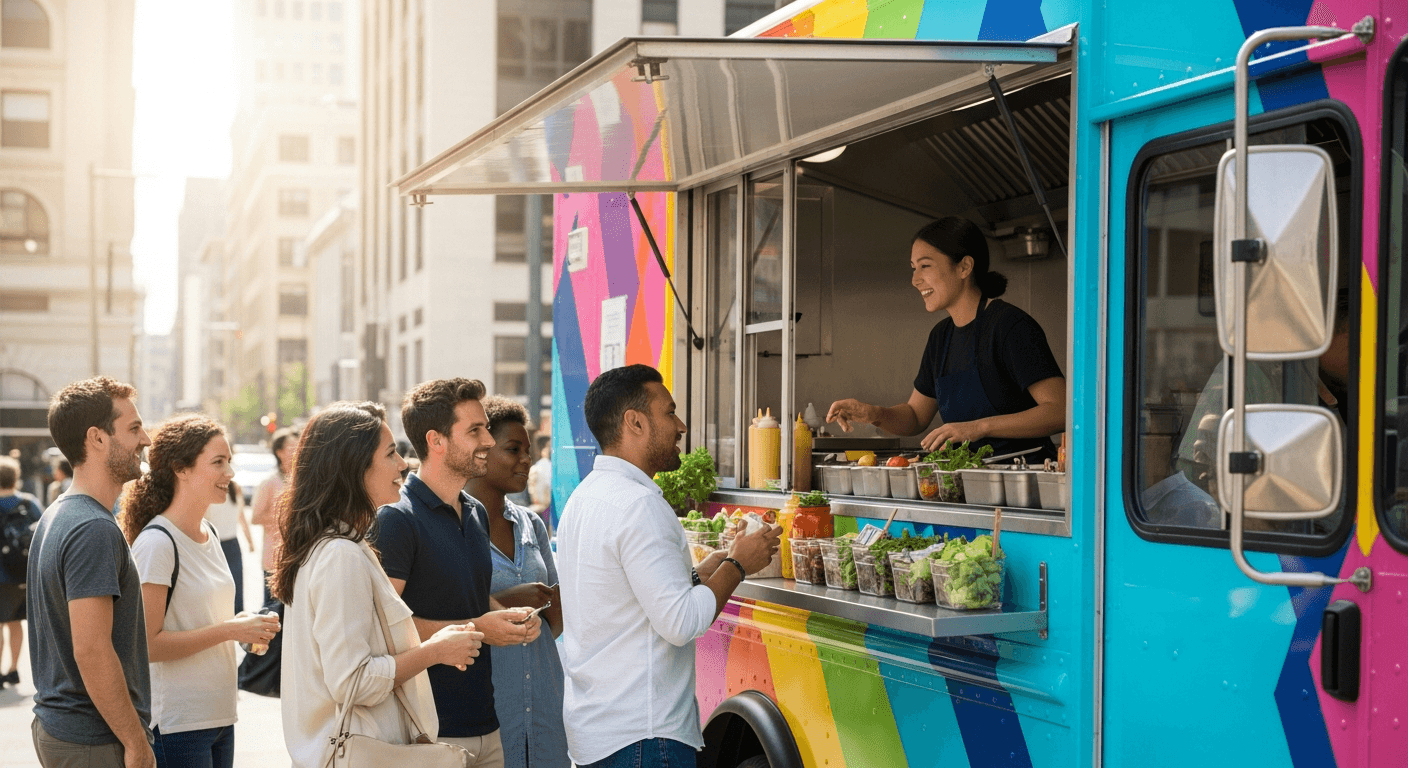
Food trucks occupy a unique position in the insurance landscape because they combine the risks of a mobile vehicle, a commercial kitchen, and a customer-facing retail operation into a single unit that travels from location to location. A personal auto policy will not cover a vehicle used for commercial food preparation and sales, and a standard restaurant insurance policy is not designed for a business that operates on wheels and changes locations daily. Food truck owners need a specialized insurance program that addresses the dual nature of their business as both a commercial vehicle and a food service operation, along with the additional complexities that come with operating in multiple jurisdictions and venues.
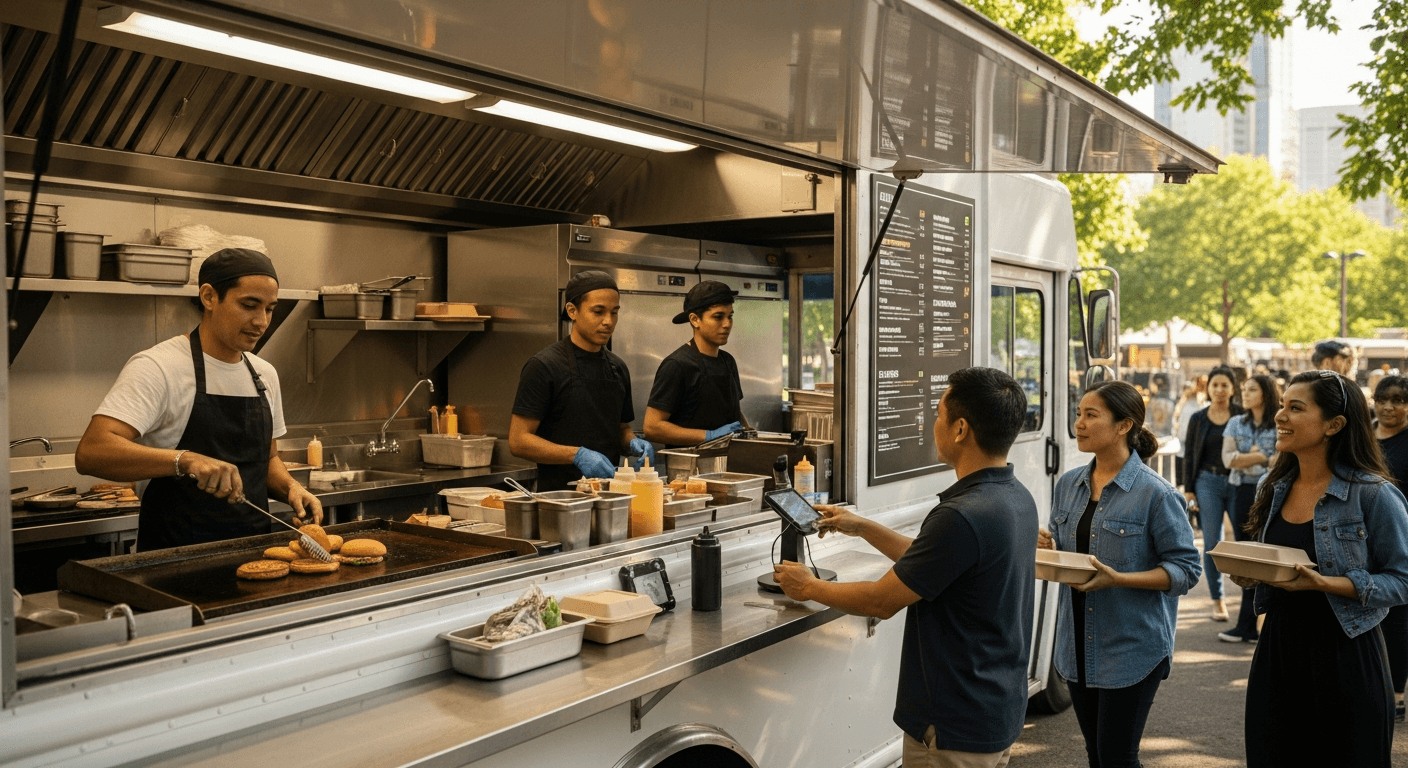
The mobile nature of food truck operations introduces risks that fixed-location restaurants simply do not face. Driving a large commercial vehicle through urban traffic, backing into tight event spaces, and setting up temporary cooking operations in parking lots and festival grounds creates a constant stream of auto liability, property damage, and bodily injury exposures. Propane tanks, deep fryers, and griddles operating inside a moving vehicle present fire and burn hazards that are magnified by the confined space and proximity to fuel systems. Weather events, road accidents, and mechanical breakdowns can damage both the vehicle and the expensive kitchen equipment it contains simultaneously.
Many food truck operators are surprised to discover that insurance is not optional for their business. Most cities and counties require proof of commercial auto insurance and general liability coverage before issuing mobile food vendor permits. Event organizers, festivals, and private venue owners almost universally require food trucks to carry liability insurance and name the venue as an additional insured before allowing them to operate on the premises. Commissary kitchens, where many food truck operators are required to prepare and store food, typically require tenants to provide certificates of insurance. Without the proper coverage in place, a food truck operator may find it impossible to obtain the permits and venue access necessary to operate the business.
Key Coverage Types to Compare
Commercial auto insurance is the most critical coverage for any food truck operation because the vehicle itself is both your primary business asset and your most significant liability exposure. A commercial auto policy covers liability for bodily injury and property damage you cause to others while driving, as well as physical damage to the truck itself from collisions, theft, vandalism, fire, and weather events. Food truck commercial auto policies should include coverage for the permanently attached kitchen equipment, which personal or standard commercial auto policies may exclude. Pay attention to whether the policy covers the truck at its full replacement value or only at actual cash value, which deducts depreciation and can leave you significantly underinsured on a customized vehicle.
General liability insurance covers bodily injury and property damage claims arising from your food truck operations that are not related to driving the vehicle. This includes customers who are burned by hot food, suffer allergic reactions to undisclosed ingredients, contract foodborne illnesses, or trip over your serving window steps or signage. Products-completed operations coverage, which is included in most general liability policies, is particularly important for food trucks because it covers claims arising from food that has already been served to the customer, such as food poisoning symptoms that develop hours after the meal. General liability also covers property damage to third-party premises, which is relevant when your food truck operations damage a parking lot surface, landscaping, or venue infrastructure.
Beyond these two foundational coverages, food truck operators should evaluate several additional policies. Inland marine insurance can cover portable equipment, signage, tables, and supplies that you transport separately from the truck or set up outside during events. Workers compensation insurance is legally required in most states if you have employees and covers their medical costs and lost wages if they are injured on the job. Business interruption or loss of income coverage reimburses you for revenue lost when your truck is out of service due to a covered claim, such as an accident or fire that requires weeks of repairs. Some providers offer food truck-specific package policies that bundle several of these coverages together at a lower combined premium than purchasing them individually.
What to Look for in a Provider
The most important quality in a food truck insurance provider is familiarity with the unique needs and operating realities of mobile food businesses. Carriers that specialize in food truck coverage understand that these businesses operate across multiple locations, serve the public directly, handle and transport perishable food products, and use commercial cooking equipment inside a vehicle, and they design their policy forms accordingly. Ask potential providers how many food trucks they insure, whether their policies are specifically written for mobile food vendors or adapted from standard restaurant or commercial auto forms, and whether they offer package policies that combine auto, liability, and property coverages into a single program.
Certificate of insurance flexibility is a practical concern that food truck operators deal with more frequently than almost any other type of business. Because food trucks operate at different venues, events, and locations throughout the week, they are constantly asked to provide certificates of insurance that name different entities as additional insureds. Some insurers charge fees for each certificate or additional insured endorsement, while others include a blanket additional insured provision that covers any entity you are contractually required to add without individual endorsement fees. Choose a provider that makes the certificate process fast and affordable, ideally through an online portal that allows you to generate certificates on demand.
Consider the provider's understanding of local regulatory requirements for food truck operations, which vary significantly from city to city and state to state. Some jurisdictions require specific minimum coverage limits for mobile food vendors that differ from standard commercial requirements. Others require specific policy endorsements or coverage forms as a condition of permit issuance. A provider with experience in your operating area will be able to ensure your policy meets all local requirements without you having to research each jurisdiction's insurance mandates independently, saving you time and reducing the risk of permit delays or denials due to non-compliant coverage documentation.
How to Compare Quotes Effectively
When comparing food truck insurance quotes, the most important step is ensuring that each quote covers both the vehicle and the business operations comprehensively. Some providers quote only commercial auto coverage and leave the general liability and other operational coverages to a separate policy or a different carrier, while others offer integrated package policies that combine everything into one program. Neither approach is inherently superior, but you need to compare the total cost and total coverage across all policies, not just the premium for a single component. Request a complete coverage summary from each provider that lists every coverage included, with limits, deductibles, and any notable exclusions.
The valuation method for your food truck and its equipment is one of the most consequential differences between quotes and one that many operators overlook. A food truck is not a standard commercial vehicle; it is a heavily customized asset that may include $50,000 to $150,000 or more in kitchen buildout, specialized electrical and plumbing systems, ventilation equipment, and custom exterior wraps and signage. Some policies value the truck at its factory sticker price and exclude the customization, while others cover the full replacement cost including all modifications. Make sure each quote specifies how the truck and its equipment will be valued in the event of a total loss, and verify that the stated value matches what it would actually cost to replace your truck with an equivalently equipped unit.
Gather at least three quotes from providers with food truck experience and compare them across multiple dimensions beyond just premium. Evaluate the deductible for each coverage component, as a $2,500 auto physical damage deductible versus a $1,000 deductible represents meaningful out-of-pocket exposure on a vehicle that is at elevated risk for minor collisions and incidents. Review whether each policy includes downtime or business interruption coverage, and if so, what the daily limit and maximum period are. Check whether the policy covers you while driving between locations, while parked and serving, and while the truck is stored overnight, as some policies have gaps during one or more of these operational phases.
Common Mistakes to Avoid
The most common and potentially most costly mistake food truck owners make is relying on personal auto insurance to cover their food truck. Personal auto policies contain explicit exclusions for vehicles used for commercial purposes, which means that any claim arising from the operation of your food truck, whether a traffic accident, a theft, or a fire, will be denied under your personal policy. Even if your food truck is built on a standard pickup truck or van chassis that you also use for personal driving, any commercial use voids the personal auto coverage. If you are currently operating a food truck under a personal auto policy, you are effectively uninsured for your most significant asset and liability exposure, and a single incident could result in personal financial ruin.
Undervaluing your food truck on the insurance application is another prevalent mistake that becomes apparent only after a loss. Many operators insure their truck for its base vehicle value without accounting for the cost of the kitchen buildout, equipment installation, electrical upgrades, generator, wrap and signage, and other modifications that transform a standard vehicle into a functioning mobile kitchen. When the truck is totaled in an accident or destroyed by fire, the insurance payout based on the understated value may cover only a fraction of what is needed to replace the complete food truck. Document every modification and equipment purchase, keep receipts, and update your insured value whenever you make significant additions or upgrades to the truck.
Failing to maintain continuous coverage is a mistake that creates both immediate and long-term problems for food truck operators. Some operators cancel their insurance during the off-season to save money, only to discover that they face higher premiums when they reapply because a gap in coverage is treated as a risk factor by underwriters. More immediately, a lapse in coverage can void your mobile food vendor permits and require you to go through the entire permitting process again, which can delay your season opening by weeks. Additionally, any incident that occurs during a coverage lapse leaves you entirely responsible for the resulting costs. If you need to reduce expenses during a slow period, consider reducing coverage limits or increasing deductibles rather than canceling the policy entirely.
Getting Started with the Right Coverage
The first step toward securing the right insurance for your food truck is taking a comprehensive inventory of your assets, operations, and risk exposures. Document the make, model, and year of your truck, the total cost of your kitchen buildout and all installed equipment, and the replacement value of any portable equipment and supplies you carry. List every city and county where you operate or plan to operate, the types of events and venues you serve, and whether you have employees or operate as a sole proprietor. This information will allow insurance providers to give you accurate quotes and ensure that no aspect of your operation falls through the coverage gaps.
CPK Insurance works with food truck operators across the country and understands the specific insurance challenges that mobile food businesses face. Our licensed advisors can help you navigate the patchwork of local permit requirements, identify the right combination of coverages for your specific operation, and find carriers that offer competitive rates for food truck insurance. We work with multiple carriers that specialize in mobile food vendor coverage, which allows us to compare options and present you with choices that balance comprehensive protection with affordable premiums.
Whether you are launching your first food truck or you have been operating for years and want to make sure your coverage has kept up with your business, CPK Insurance can provide a thorough coverage review and help you build an insurance program that protects your investment and allows you to operate with confidence. Reach out to our team to discuss your food truck insurance needs, get quotes from multiple providers, and put the right coverage in place before you serve your next customer. The cost of proper insurance is a small fraction of the cost of operating without it, and the peace of mind it provides is invaluable for any food truck owner navigating the daily risks of the mobile food industry.
Get Your Personalized Quote
Enter your ZIP code to compare insurance rates from top carriers.
Updated March 1, 2026

CPK Insurance Editorial Team
Licensed Insurance Advisors