Why Landscapers Need Insurance
Landscaping might seem like a low-risk profession compared to other construction trades, but the reality is that landscapers face a wide range of liability exposures every day. A rock thrown by a mower can shatter a car windshield or injure a bystander. A tree limb can fall on a client's roof, fence, or vehicle. Herbicide overspray can kill a neighbor's garden or lawn. These incidents happen regularly in the landscaping industry and can result in expensive claims.
Property damage is the most common source of landscaping insurance claims. Landscapers work on and around clients' most valuable assets, their homes and commercial properties, using powerful equipment that can easily cause damage. Mowers, trimmers, chainsaws, and blowers can damage siding, windows, vehicles, irrigation systems, and outdoor structures in an instant.
As your landscaping business grows and you hire employees, the risk profile expands to include workplace injuries. Landscaping work involves repetitive lifting, exposure to heat and cold, operation of sharp and powerful equipment, and chemical handling. Workers compensation claims for strains, cuts, heat-related illness, and chemical exposure are common in the industry.
Essential Insurance for Landscaping Companies
General liability insurance is the most important policy for any landscaping business. It covers claims when your work or operations cause bodily injury or property damage to a third party. If your crew damages a client's sprinkler system, if a mower throws a rock through a window, or if a client trips over your equipment and is injured, general liability pays for the damages and legal defense. Most commercial and residential clients expect landscapers to carry at least $1,000,000 in general liability coverage.
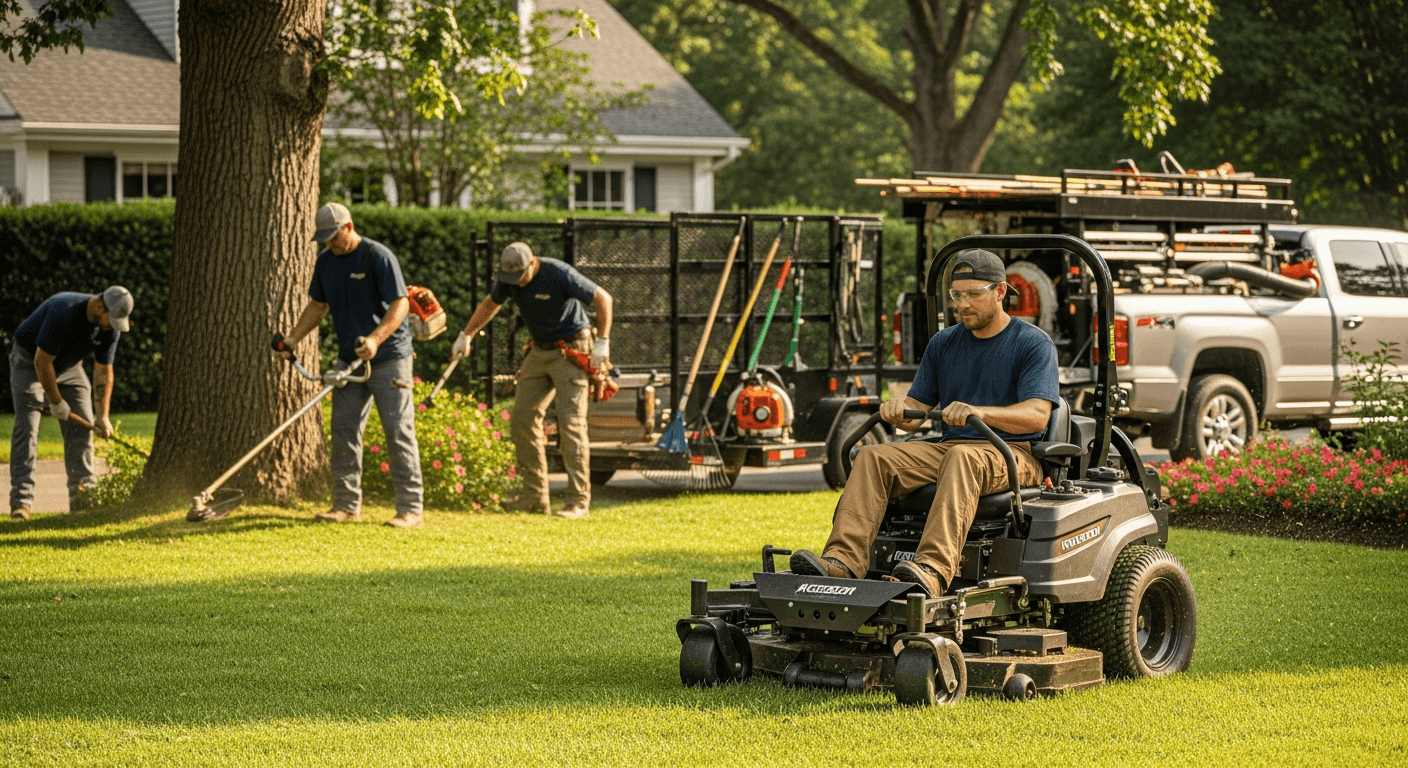
Commercial auto insurance is critical for landscaping businesses because vehicles are central to daily operations. Landscapers use trucks, trailers, and sometimes specialized vehicles to transport crews, equipment, and materials between job sites. These vehicles are on the road constantly, often towing heavy trailers loaded with mowers, trimmers, and other equipment. A serious accident can result in significant liability exposure that your personal auto policy will not cover.
Workers compensation insurance is required in most states once you hire your first employee. Landscaping work involves significant physical demands, and injuries are common. Heat exhaustion, back strains from lifting, cuts from trimming equipment, and injuries from falls are all frequent sources of workers comp claims. Even in states where workers comp is not mandatory for small employers, carrying the coverage protects both your employees and your business from the financial impact of a workplace injury.
Additional Coverage Options
Inland marine insurance protects your landscaping equipment while it is being transported or used at a job site. Commercial mowers, trimmers, chainsaws, blowers, and trailers represent a substantial investment, and they spend most of their time away from your primary business location. Inland marine coverage pays to repair or replace equipment that is stolen, vandalized, or damaged while in transit or at a client's property.
A business owners policy is ideal for landscapers who have a shop, storage yard, or office location. A BOP bundles general liability with commercial property coverage at a discounted rate, protecting your business premises and its contents against fire, theft, and other covered perils. It also typically includes business income coverage that replaces lost revenue if a covered event forces you to temporarily halt operations.
Herbicide and pesticide applicator insurance, or pollution liability coverage, is important if you apply chemicals as part of your landscaping services. Herbicide drift, overspray, and runoff can damage neighboring properties, contaminate water sources, and harm people or animals. Standard general liability policies often exclude pollution-related claims, making this supplemental coverage essential for landscapers who handle chemicals.
An umbrella policy provides extra liability protection above your general liability, commercial auto, and workers comp limits. Even a modest umbrella policy of $1,000,000 can provide critical protection in the event of a serious accident or large property damage claim.
How Much Coverage Do Landscapers Need
Most landscaping businesses should carry at least $1,000,000 per occurrence and $2,000,000 aggregate in general liability. If you work on commercial properties or high-value residential estates, higher limits of $2,000,000 per occurrence provide additional protection.
Commercial auto coverage should include at least $1,000,000 combined single limit. Make sure your policy covers all of your vehicles and trailers, and verify that hired and non-owned auto coverage is included if employees ever use personal vehicles for business purposes.
Workers compensation limits are determined by state law for medical benefits. The employers liability portion should be at least $100,000 per accident and $500,000 policy limit. Inland marine coverage should reflect the full replacement cost of all your mobile equipment and tools.
If you apply chemicals, pollution liability coverage of at least $500,000 is recommended. Some commercial clients and municipal contracts require higher pollution liability limits. An umbrella policy of $1,000,000 is a smart investment for most landscaping businesses, particularly those with multiple crews and vehicles.
Purchasing Landscaping Insurance
Work with an insurance agent who understands the landscaping industry. A specialist agent will know which carriers offer competitive rates for landscapers, which endorsements are important for your specific services, and how to structure your policy to avoid common coverage gaps. They can also advise on the correct classification codes for your operations, which directly affects your premium.
Document your equipment inventory before purchasing inland marine coverage. List every piece of equipment you own, including serial numbers, purchase prices, and current replacement values. This inventory will be essential if you ever need to file a claim for stolen or damaged equipment.
Implement safety procedures and train your crews. Carriers look favorably on landscaping companies that demonstrate a commitment to safety through documented training programs, proper equipment maintenance, and the use of personal protective equipment. Good safety practices can help you qualify for lower premiums.
Review your insurance needs seasonally. Landscaping businesses often have seasonal fluctuations in revenue and staffing, and your coverage should reflect these changes. Many carriers allow seasonal payroll adjustments for workers comp, which can significantly reduce your premiums during slower months.
Landscaper Insurance Cost Overview
General liability insurance for a landscaping business typically costs between $500 and $2,000 per year, depending on your revenue, the number of employees, and the types of services you offer. Basic mowing and maintenance services are less expensive to insure than tree removal or hardscaping work.
Commercial auto insurance for landscaping vehicles usually runs between $1,200 and $3,500 per year per vehicle. Trucks pulling trailers tend to cost more to insure than standard service vehicles. Workers compensation premiums for landscaping are calculated as a percentage of payroll, typically ranging from $3 to $8 per $100 of payroll depending on your state.
Inland marine coverage for a $30,000 equipment inventory costs approximately $400 to $1,200 per year. A business owners policy for a small landscaping shop starts around $500 annually. Pollution liability coverage, if needed, typically adds $500 to $1,500 per year.
A small landscaping company with two to four employees and a few trucks can expect total annual insurance costs of $5,000 to $15,000. Larger operations with multiple crews, more vehicles, and higher revenue will pay more. CPK Insurance helps landscapers find competitive rates by comparing quotes from multiple carriers that specialize in the green industry.
Get Your Personalized Quote
Enter your ZIP code to compare insurance rates from top carriers.
Updated March 1, 2026

CPK Insurance Editorial Team
Licensed Insurance Advisors