

































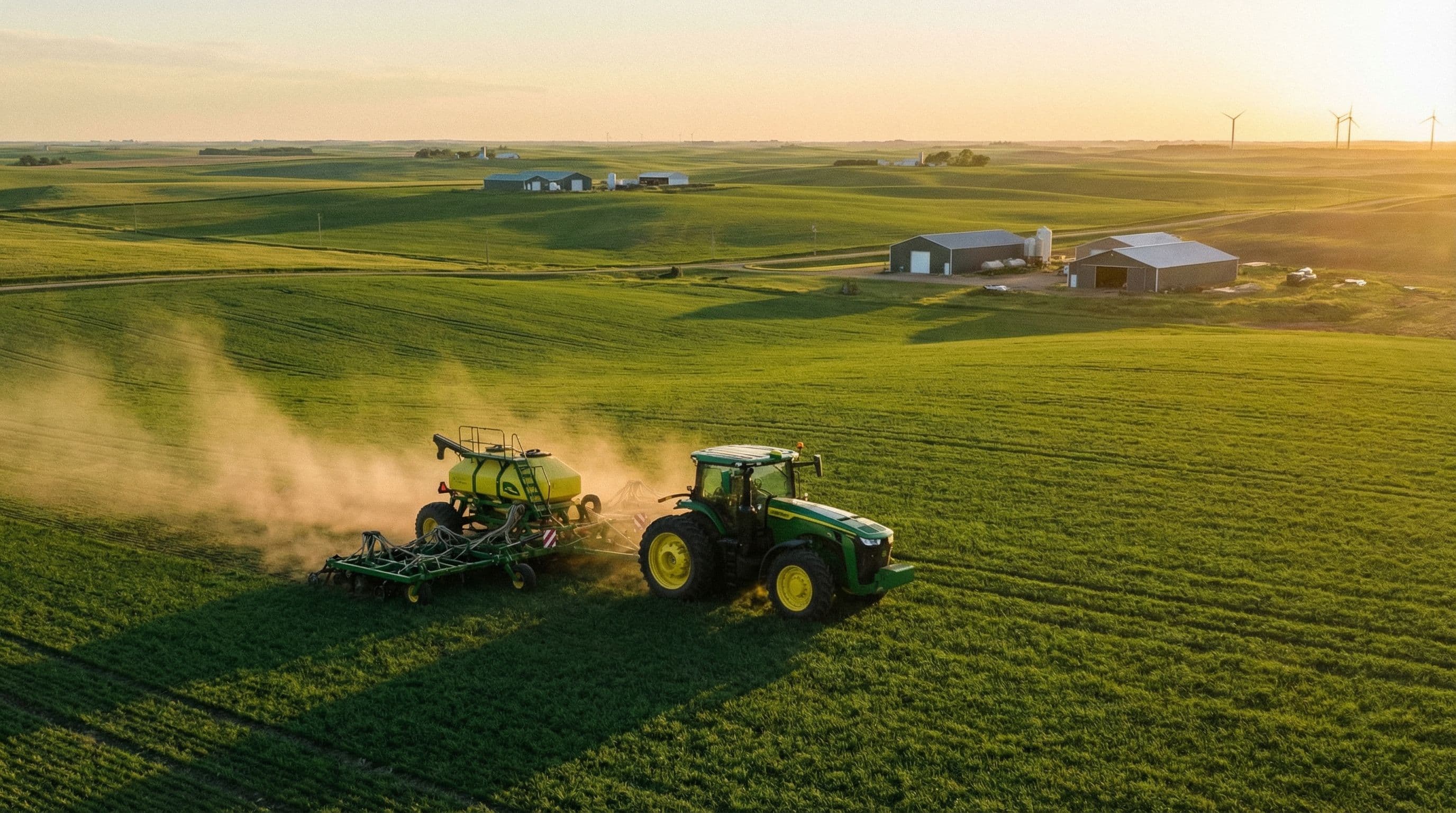
Recommended Coverage for Agribusiness in Michigan
Agribusiness businesses face unique risks that require specific coverage types. Here are the policies most agribusiness operations need:

General Liability Insurance
Essential coverage for every business — protect against third-party bodily injury, property damage, and advertising claims.

Commercial Property Insurance
Safeguard your business property, equipment, and inventory against damage and loss.

Commercial Auto Insurance
Protect your business vehicles and drivers with comprehensive commercial auto coverage.

Workers Compensation Insurance
Cover your employees' medical expenses and lost wages for work-related injuries and illnesses.

Inland Marine Insurance
Protect tools, equipment, and goods in transit or stored at locations away from your primary premises.

Commercial Umbrella Insurance
Extend your liability limits beyond your primary policies for extra protection against catastrophic claims.
Agribusiness Insurance Overview in Michigan
Michigan agribusiness operators work through a mix of lake-effect weather, spring flooding, winter storms, and severe storm exposure that can change field conditions fast. From Detroit and Grand Rapids to Warren, Sterling Heights, and Ann Arbor, farms, ranches, processors, and hauling operations often need coverage that follows equipment, vehicles, buildings, and inventory across more than one location. That is why agribusiness insurance in Michigan should be built around how your operation actually runs, not just what sits on the home farm.
Whether you manage row crops, livestock, storage, processing, or custom hauling, your insurance review should account for barns, silos, cold storage, feed buildings, tractors, combines, sprayers, trailers, and mobile property used between fields, leased acreage, markets, and processors. Michigan’s regulatory oversight through the Michigan Department of Insurance and Financial Services also makes it important to verify policy details before you request a quote. If you are comparing farm insurance quote options, start with the exposures that move with your operation and the locations where loss could interrupt work.
Why Agribusiness Businesses Need Insurance in Michigan
Michigan agribusinesses face a practical mix of weather, property, liability, and operational risks. Severe storm and winter storm hazards are rated high in the state, with flooding and tornado exposure also present. For farms and ranches, that means buildings, feed storage, equipment, and access roads may be affected by the same event, while seasonal timing can make a loss harder to absorb when planting, harvest, hauling, or processing is already underway.
Coverage should also reflect how the operation is structured. Michigan requires workers compensation for farm operations with at least one employee, though exemptions can apply for sole proprietors, partners, corporate officers, and LLC members. That makes payroll, harvest labor, livestock handling, and processing-line duties important review points. Commercial auto coverage matters too, especially for trucks, trailers, and vehicles used to move produce, livestock, feed, or equipment. Michigan’s minimum commercial auto limits are $50,000/$100,000/$10,000, but actual needs vary by route, cargo, and fleet size.
Agribusiness insurance in Michigan should also consider legal defense, settlements, third-party claims, and catastrophic claims tied to property damage, bodily injury, or advertising injury. For processors, liability should account for handled or packaged goods. For farm operations with barns, silos, greenhouses, or cold storage, commercial property insurance for farms can be central to recovery planning. The right structure depends on your buildings, equipment, vehicles, and the number of locations involved.
Michigan employs 89,355 agribusiness workers at an average wage of $34,100/year, with employment growing at 1% annually. Payroll-based coverages like workers' comp are directly tied to wage levels — higher payroll means higher premiums.
Michigan requires workers' comp for businesses with employees (exemptions may apply: Sole proprietors; Partners). Non-compliance can result in fines and personal liability for owners. Commercial auto minimums are $50,000/$100,000/$10,000.
Key Risks for Agribusiness Businesses
Each of these risks can lead to claims that cost thousands — or more. Make sure your policy addresses every one:
- Crop loss from weather events
- Livestock injury or disease
- Farm equipment breakdown
- Worker injuries during harvest
- Environmental contamination
- Product liability for processed goods
What Drives Agribusiness Insurance Costs in Michigan
Agribusiness insurance cost in Michigan varies based on acreage, facility size, livestock population, payroll, vehicle use, and the value of buildings and equipment. A row-crop farm, a ranch, a grain operation, and an agricultural processor will usually present different pricing drivers because their exposures are not the same. Seasonal labor, custom hauling, chemical storage, and on-site fuel tanks can also affect cost.
Michigan’s market data gives additional context. The state had a premium index of 134 in 2024, with 440 insurers active in the market and total premium written of 38,200. That wider market can create more comparison points, but the final quote still depends on the operation’s risk profile and selected limits. The state’s economic base also matters: Michigan had 242,800 total business establishments in 2024, and 99.6% were small businesses, so many agribusiness buyers are balancing coverage needs against tight operating budgets.
In practice, a farm insurance quote may change with the value of barns, silos, cold storage, tractors, combines, and trailers, plus the frequency of road travel and the number of employees on site. For agricultural business insurance in Michigan, quote-ready details about property, fleet, and equipment can make comparisons more precise.
Insurance Regulations in Michigan
Key regulatory requirements for businesses operating in MI.
Regulatory Authority
Michigan Department of Insurance and Financial ServicesWorkers' Compensation Insurance
Required for employers with 1+ employee.
Exempt categories:
- Sole proprietors
- Partners
- Corporate officers
- Members of LLCs
Commercial Auto Minimum Liability
$50,000/$100,000/$10,000 (bodily injury per person / per accident / property damage)
Source: Michigan Department of Insurance, U.S. Department of Labor
Agribusiness Employment in Michigan
Workforce data and economic impact of the agribusiness sector in MI.
89,355
Total Employed in MI
+1%
Annual Growth Rate
$34,100
Average Annual Wage
Top Cities for Agribusiness in MI
Source: BLS QCEW, Census ACS, 2024
What Drives Agribusiness Insurance Costs in Michigan
Michigan premiums are 34% above the national average. Comparing multiple carriers is critical for agribusiness businesses to avoid overpaying.
Michigan's top natural hazards — severe storm, winter storm, flooding — directly affect property and liability premiums for agribusiness businesses. Check your policy exclusions and ask about endorsements for these perils.
CPK Insurance compares agribusiness quotes from top-rated carriers in Michigan. Enter your ZIP code to see rates in minutes.
Where Agribusiness Insurance Demand Is Highest in Michigan
89,355 agribusiness workers in Michigan means significant insurance demand — and it's growing at 1% annually. These cities have the highest concentration of agribusiness businesses:
Climate Risk Profile
Natural Disaster Risk in Michigan
Understanding climate-related risks helps determine appropriate insurance coverage levels.
Severe Storm
High
Winter Storm
High
Flooding
Moderate
Tornado
Moderate
Expected Annual Loss from Natural Hazards
$1.4B
estimated economic loss per year across Michigan
Source: FEMA National Risk Index
Insurance Tips for Agribusiness Business Owners in Michigan
Schedule tractors, combines, sprayers, and other mobile property under inland marine insurance for farm equipment so machinery used across fields, roads, and leased acreage is tracked correctly.
Review commercial property insurance for farms with barns, silos, greenhouses, cold storage, feed buildings, and other specialized structures, and confirm replacement-cost values.
Match workers compensation for farm operations to harvest crews, livestock handling, and processing-line duties, especially if your operation employs at least one worker in Michigan.
Confirm commercial auto insurance for agribusiness covers farm trucks, trailers, and vehicles used to haul produce, livestock, feed, or equipment between fields, markets, and processors.
Ask how farm liability insurance addresses third-party claims involving bodily injury, property damage, slip and fall, customer injury, or legal defense tied to visitors and vendors.
If your operation includes a processor or packaged goods, review liability for advertising injury, settlements, and lawsuit defense connected to third-party claims.
Consider commercial umbrella insurance for higher excess liability limits when your operation has multiple locations, more vehicles, or higher-value assets that could create catastrophic claims.
If equipment moves between owned land, leased acreage, and storage sites, ask how tools and mobile property are handled during transit and while temporarily off-site.
Get Agribusiness Insurance in Michigan
Enter your ZIP code to compare agribusiness insurance rates from top carriers.
Business insurance starting at $25/mo
Agribusiness Business Types in Michigan
Find insurance tailored to your specific agribusiness business. Select your business type for coverage recommendations, pricing, and quotes:

Farm Insurance
Get a farm insurance quote built around your crops, livestock, equipment, and farm property. Coverage can be tailored for family farms, mixed operations, and equipment-heavy farms.

Ranch Insurance
Get a ranch insurance quote built for working ranches, livestock operations, and rural properties. Protect against visitor injuries, weather damage, and other ranch-specific exposures.

Nursery & Greenhouse Insurance
Get a nursery and greenhouse insurance quote built for plant inventory, visitor exposure, and equipment-heavy operations. Coverage can be tailored for liability, property, and business interruption needs.

Vineyard Insurance
Get a Vineyard insurance quote tailored to crop loss, estate damage, and visitor liability. Compare vineyard policy options for tasting rooms, estates, and grape-growing operations.

Timber & Logging Insurance
Get coverage built for timber harvesters, logging crews, and forest operations. Review core protections, then request a timber and logging insurance quote.

Agricultural Equipment Dealer Insurance
Request an agricultural equipment dealer insurance quote built for dealerships, suppliers, and service shops that handle inventory, customers, and on-site work. Coverage can be tailored for sales and service operations, lot damage, and property exposures.
Agribusiness Insurance by City in Michigan
Insurance rates and requirements can vary by city. Find agribusiness insurance information for your area in Michigan:
FAQ
Agribusiness Insurance FAQ in Michigan
Coverage varies, but it often centers on liability, commercial property, commercial auto, workers compensation, inland marine, and umbrella coverage for farms, ranches, processors, and related operations.
Share your acreage, buildings, equipment, vehicles, payroll, livestock, processing activity, and locations. A quote is usually more accurate when the carrier can review how the operation actually runs.
Inland marine insurance for farm equipment is often used for tractors, combines, sprayers, and other mobile property that moves across fields, roads, leased acreage, and storage sites.
Workers compensation is required for farm operations with at least one employee, subject to certain exemptions. Commercial auto minimums in Michigan are $50,000/$100,000/$10,000, though actual needs may be higher depending on the operation.
Agribusiness insurance cost in Michigan varies based on acreage, facility size, livestock, payroll, vehicles, building values, equipment values, and claims history. A review of your operation is needed for a quote.
Agricultural business insurance in Michigan often starts with commercial property, liability, and workers compensation, then adds coverage based on processing activity, storage, and the value of equipment and facilities.
Use commercial property insurance for farms for buildings and inland marine insurance for movable equipment, then confirm how vehicles, trailers, and tools are handled across fields, markets, and processors.
Review liability, excess liability, and umbrella coverage limits based on your buildings, vehicles, equipment, payroll, and visitor exposure. The right limit varies by operation and risk profile.
Most mixed operations start with General Liability Insurance, Commercial Property Insurance, Workers Compensation Insurance, and Commercial Auto Insurance, then add Inland Marine Insurance for mobile equipment. Livestock injury or disease, equipment movement, and seasonal labor can create different exposures than crop-only farms, so the policy mix should reflect both sides of the business.
Some business policies may help with related property damage, but crop loss from weather events is often handled through specialized crop coverage rather than standard Commercial Property Insurance. An insurance advisor can help you understand where your farm policy ends and whether additional protection is needed for planting, yield, or revenue risk.
Yes, Commercial Property Insurance can often be structured to cover farm buildings, but the policy should be reviewed carefully for construction type, contents, and replacement cost. Barns, silos, greenhouses, and cold storage may need specific valuation and endorsements so the limits match the actual rebuild cost.
In many cases, yes, especially if you have employees who handle equipment, livestock, or packing operations during harvest. Workers Compensation Insurance can help with medical costs and lost wages after a work-related injury, and it is especially important where labor conditions change quickly during peak season.
Commercial Auto Insurance can help protect vehicles used for hauling livestock, grain, produce, feed, or equipment on public roads. If you also tow trailers or use vehicles across multiple worksites, make sure the policy includes the right vehicles, drivers, and liability limits for your routes and cargo.
General Liability Insurance is a starting point, but product liability for processed goods may require specific policy language or endorsements. If your operation packages, labels, or distributes food or agricultural products, ask whether your coverage addresses contamination, spoilage, and recall-related claims.
Commercial Umbrella Insurance can add extra liability limits above General Liability Insurance, Commercial Auto Insurance, and Workers Compensation Insurance where applicable. It may be especially useful for larger farms, ranches, or processors that face higher exposure from vehicle accidents, visitor injuries, environmental claims, or product liability.
Insurers often look favorably on maintenance records, equipment inspections, worker safety training, locked chemical storage, and documented biosecurity practices. These steps can help reduce losses from farm equipment breakdown, worker injuries during harvest, and environmental contamination, which may support more favorable pricing.