


































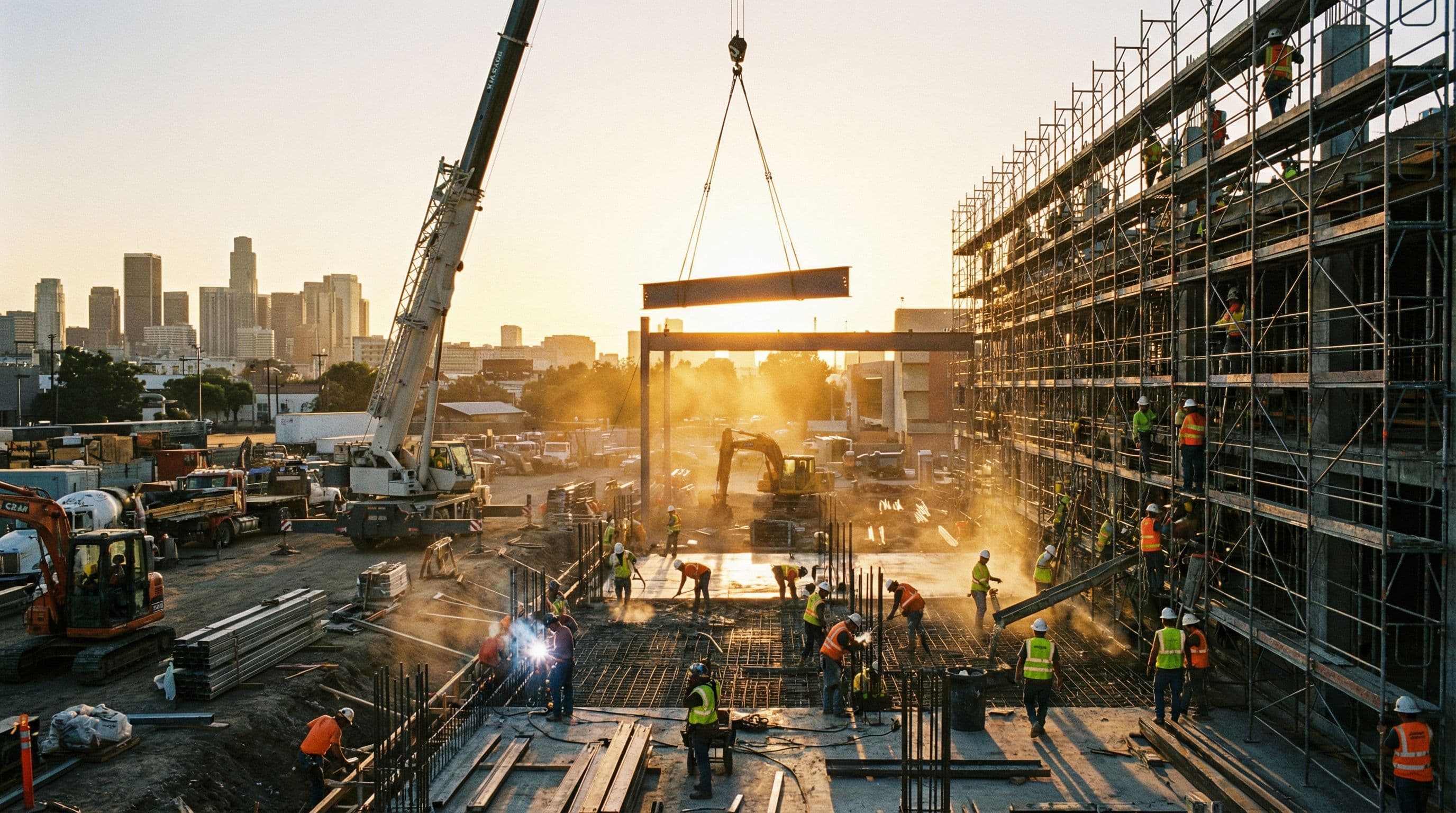
Recommended Coverage for Builders Risk / Construction Support in Virginia
Builders Risk / Construction Support businesses face unique risks that require specific coverage types. Here are the policies most builders risk / construction support operations need:

General Liability Insurance
Essential coverage for every business — protect against third-party bodily injury, property damage, and advertising claims.

Commercial Property Insurance
Safeguard your business property, equipment, and inventory against damage and loss.

Inland Marine Insurance
Protect tools, equipment, and goods in transit or stored at locations away from your primary premises.

Workers Compensation Insurance
Cover your employees' medical expenses and lost wages for work-related injuries and illnesses.

Commercial Umbrella Insurance
Extend your liability limits beyond your primary policies for extra protection against catastrophic claims.
Builders Risk / Construction Support Insurance Overview in Virginia
A coastal wind shift, a downtown renovation, and a materials delivery stuck at a job site can all change the risk picture fast. If you’re comparing a builders risk insurance quote in Virginia, the details matter: whether the work is in Virginia Beach, Norfolk, or Richmond; whether the project is ground-up construction or a residential renovation; and whether framing, finishes, and stored materials are already on site. Virginia’s construction market is active, with 26,648 workers in the industry and top city concentration in Virginia Beach, Norfolk, and Richmond. That means more jobs in progress, more subcontractor coordination, and more exposure to theft, storm damage, and project delays. A quote should reflect the completed value of the build, the project schedule, and where materials are stored or moved. It should also fit Virginia’s insurance environment, including oversight by the Virginia Bureau of Insurance and the state’s workers’ compensation rules for employers with 2 or more employees. The goal is to line up coverage with the job site before work gets too far along.
Why Builders Risk / Construction Support Businesses Need Insurance in Virginia
Builders risk and construction support projects in Virginia face a mix of coastal and inland exposures that can interrupt work quickly. The state’s climate risk profile shows high hurricane and flooding hazards, plus moderate severe storm and winter storm risk. For a project in Virginia Beach or Norfolk, that can mean wind-driven damage, water intrusion, or site disruption. In Richmond and other inland markets, storm exposure still matters, especially for open framing, temporary enclosures, and stored materials.
Insurance also matters because construction losses are rarely limited to one damaged component. Damage to structures under construction, theft of building materials, fire risk, vandalism, and equipment breakdown can all affect the schedule and the final project value. A policy should be reviewed against the full completed value, not just what has been installed so far. That is especially important when labor, materials, and soft costs are part of the contract.
Virginia’s regulatory environment adds another layer. The Virginia Bureau of Insurance oversees the market, and workers’ compensation is required for employers with 2 or more employees, subject to listed exemptions. For contractors working across multiple jobsites, construction support insurance quote planning often includes builders risk coverage, inland marine protection, general liability, workers compensation, and umbrella coverage. That mix helps align the policy with the realities of work in progress, whether the project is a renovation in a dense city block or a new build in a coastal growth area.
Virginia employs 26,648 builders risk / construction support workers at an average wage of $63,200/year, with employment growing at 1.3% annually. Payroll-based coverages like workers' comp are directly tied to wage levels — higher payroll means higher premiums.
Virginia requires workers' comp for businesses with 2+ employees (exemptions may apply: Sole proprietors; Partners). Non-compliance can result in fines and personal liability for owners. Commercial auto minimums are $30,000/$60,000/$20,000.
Key Risks for Builders Risk / Construction Support Businesses
Each of these risks can lead to claims that cost thousands — or more. Make sure your policy addresses every one:
- Damage to structures under construction
- Theft of building materials
- Weather-related project delays
- On-site worker injuries
- Subcontractor default
What Drives Builders Risk / Construction Support Insurance Costs in Virginia
Builders risk insurance cost in Virginia varies based on the project’s completed value, construction type, length of the build, and the materials involved. A ground-up commercial build in Richmond may price differently than a residential renovation in Virginia Beach or Norfolk, especially if the jobsite is exposed to hurricane, flooding, or winter storm conditions. The state’s premium index of 96 suggests pricing context that may differ from the national baseline, but the final premium still depends on project-specific details.
Virginia’s construction market also influences how underwriters view the risk. With 222,600 total business establishments and 99.5% classified as small businesses, many projects involve smaller contractors, tighter schedules, and more coordination between trades. That can affect builders risk policy structure, especially when materials are staged on-site, moved between locations, or stored off-site. Labor intensity, subcontractor activity, and project timing can also matter.
For a quote for builders risk insurance, expect questions about the job type, address, construction phase, occupancy status, and whether the project includes materials in transit coverage or project delay coverage. The more complete the project details, the easier it is to match the quote to the actual exposure.
Insurance Regulations in Virginia
Key regulatory requirements for businesses operating in VA.
Regulatory Authority
Virginia Bureau of InsuranceWorkers' Compensation Insurance
Required for employers with 2+ employees.
Exempt categories:
- Sole proprietors
- Partners
- Corporate officers
- Farm laborers
Commercial Auto Minimum Liability
$30,000/$60,000/$20,000 (bodily injury per person / per accident / property damage)
Source: Virginia Department of Insurance, U.S. Department of Labor
Builders Risk / Construction Support Employment in Virginia
Workforce data and economic impact of the builders risk / construction support sector in VA.
26,648
Total Employed in VA
+1.3%
Annual Growth Rate
$63,200
Average Annual Wage
Top Cities for Builders Risk / Construction Support in VA
Source: BLS QCEW, Census ACS, 2024
What Drives Builders Risk / Construction Support Insurance Costs in Virginia
Virginia premiums are 4% below the national average. Builders Risk / Construction Support businesses here can often find competitive rates.
Virginia's top natural hazards — hurricane, flooding, severe storm — directly affect property and liability premiums for builders risk / construction support businesses. Check your policy exclusions and ask about endorsements for these perils.
CPK Insurance compares builders risk / construction support quotes from top-rated carriers in Virginia. Enter your ZIP code to see rates in minutes.
Where Builders Risk / Construction Support Insurance Demand Is Highest in Virginia
26,648 builders risk / construction support workers in Virginia means significant insurance demand — and it's growing at 1.3% annually. These cities have the highest concentration of builders risk / construction support businesses:
Climate Risk Profile
Natural Disaster Risk in Virginia
Understanding climate-related risks helps determine appropriate insurance coverage levels.
Hurricane
High
Flooding
High
Severe Storm
Moderate
Winter Storm
Moderate
Expected Annual Loss from Natural Hazards
$1.2B
estimated economic loss per year across Virginia
Source: FEMA National Risk Index
Insurance Tips for Builders Risk / Construction Support Business Owners in Virginia
Set the builders risk limit to the full completed value of the project, including labor, materials, and any contract-related soft costs.
Confirm how the policy handles hurricane, flooding, severe storm, and winter storm exposure for jobs in coastal and inland Virginia.
Ask whether renovation insurance coverage changes if the structure is occupied during work, especially in dense city projects.
Check that materials in transit coverage applies when supplies move between suppliers, temporary yards, and the job site.
Review whether theft of building materials, vandalism, and fire risk are included for stored framing, fixtures, and finishes.
Match the builders risk policy to the project phase so new construction insurance and renovation coverage are aligned with the actual work in progress.
If your operation spans multiple sites, ask how construction insurance for contractors can be coordinated with inland marine, general liability, and workers compensation.
Verify whether project delay coverage is available for weather-related interruptions and whether any waiting periods or limits apply.
Get Builders Risk / Construction Support Insurance in Virginia
Enter your ZIP code to compare builders risk / construction support insurance rates from top carriers.
Business insurance starting at $25/mo
Builders Risk / Construction Support Business Types in Virginia
Find insurance tailored to your specific builders risk / construction support business. Select your business type for coverage recommendations, pricing, and quotes:

Renovation Contractor Insurance
Get a renovation contractor insurance quote built for remodeling jobs, hidden hazards, and project liability. Coverage can be tailored to your crew, jobsites, and project type.

Scaffolding Company Insurance
Get scaffolding company insurance built for collapse liability, fall injury claims, and equipment damage. Request a quote with the details your operation needs.

Crane Operator Insurance
Get coverage built for crane lifts, rigging work, and heavy lift operations. Request a crane operator insurance quote to review limits, certificates, and jobsite requirements.

Construction Equipment Rental Insurance
Get coverage built for rental yards, jobsite deliveries, and contractor disputes. A construction equipment rental insurance quote can help you compare limits, deductibles, and protection for rented machines.
Builders Risk / Construction Support Insurance by City in Virginia
Insurance rates and requirements can vary by city. Find builders risk / construction support insurance information for your area in Virginia:
FAQ
Builders Risk / Construction Support Insurance FAQ in Virginia
It is generally designed for damage to structures under construction, building materials, and work in progress. Coverage details vary by policy and project type, so the completed value, location, and occupancy status all matter.
Common quote details include the project address, type of build or renovation, completed value, construction timeline, materials on site, storage locations, and whether the job is occupied or vacant during work.
New construction insurance usually focuses on a structure being built from the ground up, while renovation insurance coverage may need to account for an existing building, occupied spaces, and partial completion. The risk profile can differ a lot by project.
Cost drivers include project size, construction type, duration, materials, location, theft exposure, and weather risk. Virginia Beach, Norfolk, and Richmond can each present different underwriting considerations based on the site and scope.
Yes, builders risk coverage is typically designed around work in progress, but the exact treatment of materials, labor, and stored items depends on the policy form and the project details submitted for the quote.
Many contractors pair builders risk policy protection with inland marine, general liability, workers compensation, and commercial umbrella coverage. The right mix depends on the project, the number of employees, and the sites involved.
Some policies may address project delay coverage or theft of building materials, but the terms vary. It is important to ask how the policy handles delay triggers, limits, and any conditions tied to weather events or site security.
Timing varies by project complexity and how complete the submission is. A quote for builders risk insurance is usually faster when the project address, scope, completed value, and schedule are ready at the outset.
It can, depending on the policy terms and where the materials are located. Theft of building materials is a common construction exposure, so it is important to confirm whether the policy covers materials on-site, in storage, and in transit through Inland Marine Insurance.
The owner, general contractor, or developer may purchase it, depending on the contract. The key is to confirm who is responsible for insuring damage to structures under construction and whether subcontractors must carry their own General Liability Insurance and Workers Compensation Insurance.
Some policies may address certain soft costs tied to covered losses, but coverage varies widely. Weather-related project delays are often managed through careful policy wording, so ask whether your builders risk policy includes delay in completion, extra expense, or soft cost protection.
Builders risk may help with physical damage to the project, but subcontractor default is usually a contract and risk-management issue rather than a standard property claim. Require subcontractors to carry their own insurance, and consider how your General Liability Insurance and contract terms allocate responsibility.
Usually not for active projects. Commercial Property Insurance is designed for your owned buildings, contents, and fixed locations, while builders risk and Inland Marine Insurance are often needed for work in progress, tools, and materials at jobsites.
In most cases, yes, if you have employees or eligible laborers. Workers Compensation Insurance can help cover on-site worker injuries, medical costs, and wage replacement benefits, and many project owners require proof before work begins.
Yes, Commercial Umbrella Insurance can provide additional liability limits above your General Liability Insurance and other underlying policies. That can be especially useful on larger builds where a serious injury or third-party claim could exceed primary limits.
Read the builders risk and Inland Marine Insurance forms carefully, because temporary fencing, scaffolding, staging materials, and transported supplies may be treated differently. A construction-focused review can help identify gaps before a loss happens.